
Airbnb and other short-term rentals are some of the best clients a cleaning business can have. Hosts need a cleaner after every single guest, they book work regularly, and they care more about reliability than about getting the lowest price. But turnover cleans work differently from regular house cleaning, and pricing them like a normal clean is one of the most common mistakes.
This guide explains what to charge for Airbnb cleaning in 2026, what a turnover clean should include, and which extras you should charge for separately.
Cleaner rates vs. the guest cleaning fee
First, an important difference. On Airbnb, hosts usually charge guests a cleaning fee when they book. That’s the host’s price to the guest. What matters to you is your rate per turnover: what you charge the host for cleaning between guests.
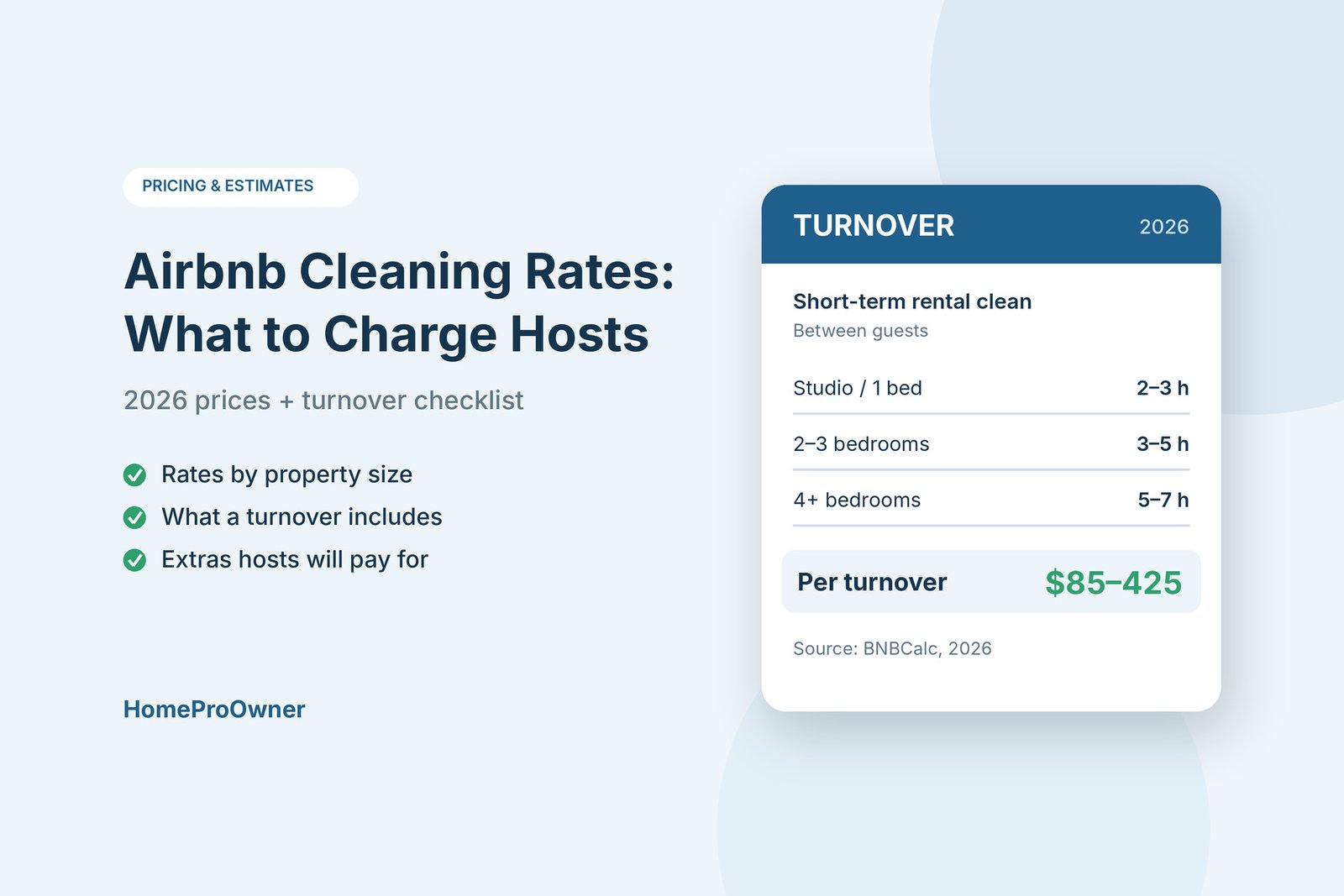
The two are related, because hosts use the guest fee to cover your cost. According to BNBCalc, cleaners typically charge hosts between $85 and $160 per turnover for a studio, and between $210 and $425 for a large home, depending on location and service level. Knowing what guests pay in your area helps you understand how much room a host has in their budget.
How much to charge per turnover
Most turnover cleaners charge a flat rate per turnover, based on the size of the property. It’s simple for hosts to budget, and once you know the property, you know exactly how long it takes.
To set your flat rates, start with the time each property takes. BNBCalc estimates that a studio takes around 2 to 3 hours and a home with 4 or more bedrooms around 5 to 7 hours. Here’s how that translates into prices at an example rate of $45 per hour:
| Property size | Estimated time | Price at $45/hour |
|---|---|---|
| Studio or 1 bedroom | 2–3 hours | $90–$135 |
| 2 bedrooms | 3–4 hours | $135–$180 |
| 3 bedrooms | 4–5 hours | $180–$225 |
| 4+ bedrooms | 5–7 hours | $225–$315 |
The times for 2- and 3-bedroom properties are our own estimates between BNBCalc’s figures. Your real times will depend on the property, the number of bathrooms and how guests leave it. Time your first few turnovers at each property and adjust.
What a turnover clean should include
A turnover is more than a cleaning job: the property has to be ready for the next guest to walk in and feel like they’re the first. A standard turnover usually includes:
- Beds: strip all beds and make them with fresh linens.
- Bathrooms: clean and disinfect toilets, showers, sinks and mirrors, and replace towels.
- Kitchen: clean counters, sink, stovetop, microwave and appliance exteriors; load or empty the dishwasher; check the fridge for leftovers.
- Floors: vacuum and mop all rooms.
- Trash: empty every bin and take the trash out.
- Staging: arrange towels, pillows and amenities the way the host wants them for listing photos.
- Inspection: check for damage, missing items or anything broken, and report it to the host with photos.
Agree on a written checklist with each host. Many hosts have specific standards (like folding towels a certain way), and a shared checklist avoids disputes and bad reviews.
Extras you should charge for
Turnovers often involve tasks beyond cleaning. Price these separately so your base rate stays competitive:
- Laundry: washing and drying linens and towels, especially if you take them off-site. This can add hours to every turnover.
- Restocking: refilling toilet paper, soap, coffee and other supplies. BNBCalc estimates supplies cost hosts around $10 to $28 per turnover; agree on whether the host provides them or you buy them and charge them back.
- Same-day turnovers: when a guest checks out at 11 a.m. and the next one arrives at 3 or 4 p.m., you’re working against the clock. Many cleaners charge more for tight windows.
- Periodic deep cleans: every few months, the property needs a deeper clean (inside appliances, baseboards, windows). Price it like any deep clean. Our guide on how to price a deep cleaning job explains how.
- Extra amenities: hot tubs, grills, balconies or outdoor furniture.
An example
A host has a 2-bedroom, 2-bathroom apartment with frequent bookings. The turnover takes you about 3.5 hours, and the host wants you to handle laundry and restocking.
| Item | Price |
|---|---|
| Turnover clean (3.5 hours at $45/hour) | $157.50 |
| Laundry (linens and towels, done on-site) | $25 |
| Restocking (host provides supplies) | $10 |
| Total per turnover | $192.50 |
If the property has 8 turnovers a month, that’s around $1,540 a month from a single client. That’s why Airbnb hosts are worth winning, and worth keeping.
Why reliability matters more than price
For a host, a late or missed clean can mean a bad review, a refund, or a cancelled booking. That’s why many hosts will happily pay more for a cleaner they can count on. To stand out:
- Confirm every turnover the day before.
- Send photos when you finish.
- Report damage and low supplies right away.
- Have a backup plan if you’re sick.
If you’re looking for your first hosts, our guide on how to get your first cleaning clients includes tips on partnering with local hosts.
Common mistakes to avoid
- Pricing turnovers like a regular clean and forgetting laundry, staging and inspection time.
- Including laundry for free. It’s often the most time-consuming part.
- Not timing each property. Two 2-bedroom apartments can take very different times.
- Skipping the checklist. Without one, the host’s expectations and yours will eventually clash.
- Not charging for last-minute jobs. Same-day or emergency requests deserve a premium.
Frequently asked questions
Should I charge Airbnb hosts by the hour or a flat rate?
A flat rate per turnover is the most common, because hosts can plan their costs. Base it on the time each property really takes, and review it if the work changes.
How long does an Airbnb turnover take?
It depends on size and condition. As a rough guide, a studio takes around 2 to 3 hours and a home with 4 or more bedrooms around 5 to 7 hours.
Who pays for cleaning supplies and amenities?
It depends on your agreement. Some hosts provide everything; others prefer that you restock and add the cost to your invoice. Put it in writing either way.
Is Airbnb cleaning more profitable than regular house cleaning?
It can be, because hosts book frequently and value reliability. The trade-off is tighter schedules and less flexibility, so price the extra pressure into your rates.