
One of the best things about starting a cleaning business is how little money you need. Unlike a restaurant or a retail store, you don’t need a location, expensive machinery or inventory. Many residential cleaners start with a few hundred dollars and grow from there.
But “cheap to start” doesn’t mean “free”. Insurance, supplies, licenses and marketing all add up, and it helps to know the real numbers before you begin. This guide breaks down every startup cost, shows two example budgets, and includes a free calculator to estimate your own.
Startup costs at a glance
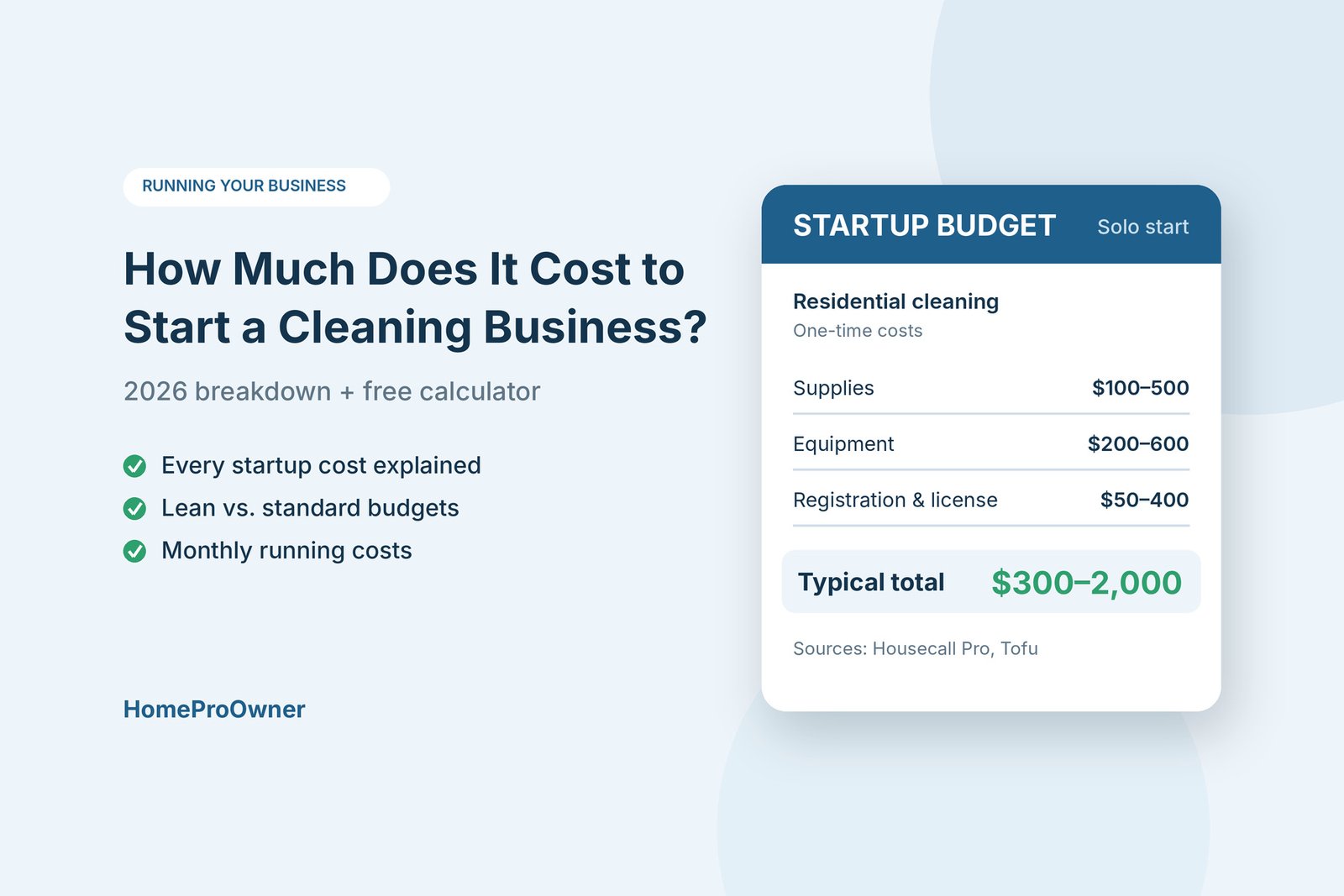
Here are typical one-time and recurring costs for a residential cleaning business in the U.S., based on 2026 data from Housecall Pro and Tofu:
| Cost | Typical range | Type |
|---|---|---|
| Cleaning supplies and chemicals | $100–$500 | One-time, then monthly refills |
| Equipment (vacuum, mop, microfiber, caddy) | $200–$600 | One-time |
| Business registration or LLC | $0–$500 | One-time, varies by state |
| Business license or permit | $50–$200 | One-time or yearly |
| General liability insurance | $54–$75 per month, or $500–$1,200 per year | Recurring |
| Bonding | $100–$300 per year | Yearly |
| Marketing (cards, website, Google profile) | $0–$500 | One-time to start |
Both sources agree that a solo residential cleaning business can launch for well under $2,000. Tofu estimates a range of about $300 to $2,000, and Housecall Pro says many residential businesses can start for under $1,000. Commercial cleaning usually costs more, because it needs bigger equipment, a vehicle and higher insurance limits.
What each cost covers
Supplies. All-purpose cleaner, glass cleaner, disinfectant, degreaser, bathroom cleaner, microfiber cloths, sponges, scrub brushes, gloves and trash bags. Start with what your first jobs need and add specialty products later.
Equipment. A good vacuum is your most important tool. Add a mop and bucket, a cleaning caddy, an extendable duster and a step stool. You can upgrade as you grow; a HEPA vacuum becomes important if you take on deep or post-construction cleans.
Registration. Many cleaners start as sole proprietors, which can cost little or nothing. Forming an LLC typically costs between $50 and $500 depending on your state, and can help separate your personal and business finances. Check your state’s requirements, and consider talking to an accountant.
Licenses. Most cities or counties require a general business license. A special cleaning license usually isn’t needed for basic residential cleaning, but rules vary. In California, for example, janitorial companies must register with the state. Always check your city, county and state.
Insurance. General liability insurance protects you if you damage something or someone gets hurt in a client’s home. Many clients will ask whether you’re insured, and saying yes helps you win jobs. Paying monthly keeps your upfront cost low.
Bonding. A janitorial bond protects clients against theft by you or your staff. It’s not always required for residential work, but it builds trust and is often required for commercial contracts.
Marketing. You can start almost for free with a Google Business Profile and messages to your network, as explained in our guide on how to get your first cleaning clients. Business cards and simple flyers cost little.
Two example budgets
Lean start (solo, residential):
| Item | Cost |
|---|---|
| Supplies (using some you already own) | $100 |
| Basic equipment | $200 |
| Sole proprietor registration | $50 |
| Local business license | $50 |
| Liability insurance, first month | $55 |
| Business cards | $20 |
| Total to start | $475 |
Standard start (solo, more prepared):
| Item | Cost |
|---|---|
| Full supply kit | $300 |
| Better equipment, including a quality vacuum | $600 |
| LLC formation | $200 |
| Business license | $100 |
| Liability insurance, paid yearly | $800 |
| Bonding | $200 |
| Website, cards and flyers | $300 |
| Total to start | $2,500 |
The lean budget gets you working fast. The standard budget makes you look more established from day one. Both are valid; many owners start lean and upgrade with their first earnings.
Don’t forget your monthly running costs
Startup costs are only half the picture. Once you’re working, you’ll have recurring costs. Housecall Pro estimates:
- Insurance: $54–$75 per month
- Supply refills: $50–$300 per month
- Transportation (gas, maintenance, parking): $100–$500 per month
- Marketing: $150–$1,000+ per month, although you can keep this much lower at first with free methods
- Software: varies by plan; many scheduling and invoicing tools have free or low-cost options
Your prices need to cover these costs, plus your own pay and taxes. If you haven’t set your prices yet, our guide on how to write a cleaning estimate includes a free pricing calculator.
Calculate your own startup costs
Use the calculator below to estimate how much you need to start, your monthly costs, and how many jobs it takes to cover them. The default numbers are a lean, solo residential start.
Cleaning Business Startup Cost Calculator
The default numbers are a lean, solo residential start. Change any amount to match your situation. Enter 0 for anything you already have.
One-time startup costs ($)
Monthly running costs ($)
Estimates only. Costs vary by state and city, and the job counts don’t include your own pay or taxes. Check local licensing and insurance requirements before you start.
How to keep your startup costs low
- Start solo and residential. No payroll, no second vehicle, lower insurance.
- Use what you already have. Your own vacuum and supplies can cover your first jobs.
- Buy for the jobs you have, not the jobs you hope to get. Specialty equipment can wait.
- Pay insurance monthly instead of yearly to protect your cash.
- Market for free first. Your network, your Google profile and local groups cost nothing.
- Reinvest your first earnings into better equipment and marketing.
For a full plan, read our guide on how to start a cleaning business with no money.
Frequently asked questions
How much does it cost to start a cleaning business?
A solo residential cleaning business typically costs between $300 and $2,000 to start, depending on how much equipment you buy and whether you form an LLC and pay insurance yearly.
Do I need a license to start a cleaning business?
Most cities or counties require a general business license. A special cleaning license usually isn’t needed for basic residential cleaning, but requirements vary by state and city, so always check locally.
Do I need insurance to start a cleaning business?
It’s strongly recommended before you work in anyone’s home. General liability insurance protects you if something goes wrong, and many clients will ask about it.
Is it cheaper to start a residential or commercial cleaning business?
Residential is usually cheaper. Commercial cleaning often requires bigger equipment, a vehicle, higher insurance limits and bonding.